intro5
Heat Fin Double Stacking

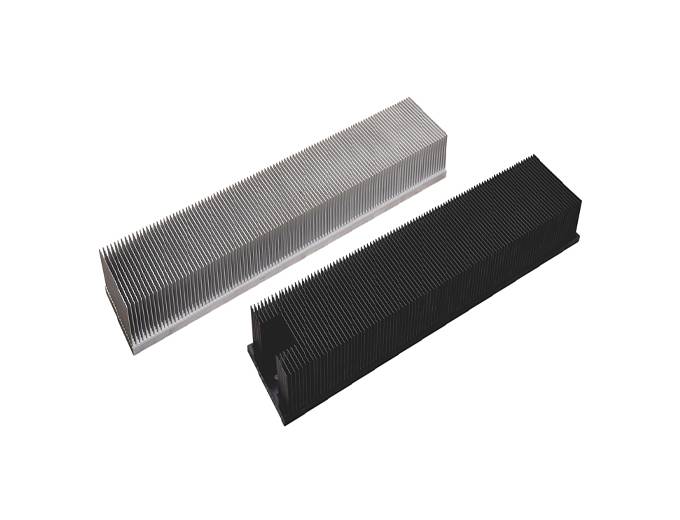
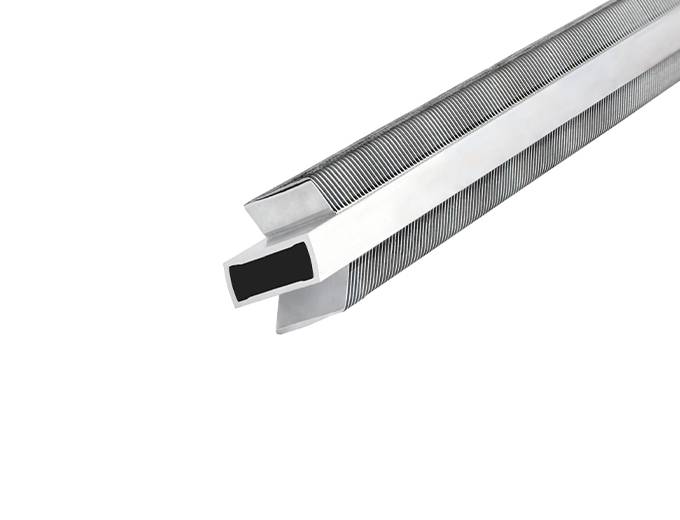
Double-sided milled fin heat sinks involve first milling fin-shaped teeth onto both the upper and lower surfaces of aluminum extrusions with tubes. Subsequently, PTC elements and conductive electrode sheets are wrapped in insulating paper and inserted into the through-holes of the milled fin heat sink (also known as a milled-fin heat sink or milled-fin radiator). 


The protruding sections on both sides of the through-holes are then compressed to ensure the PTC element and electrode sheets are tightly bonded to the heat sink. This achieves optimal heat dissipation. Leveraging the unique positive temperature coefficient (PTC) characteristics of the core heating element, this design facilitates the full utilization of the heater's power output.


Advantages: The double-sided fin design enables an ultra-thin, high-density fin structure that maximizes thermal conductivity. It also accommodates various inner tube shapes and configurations, making it suitable for diverse PTC heating applications. The curved fin structure increases heat dissipation area, enhances airflow direction, and reduces aerodynamic drag. Furthermore, the one-piece molding eliminates heat loss from welding or brazing, lowers costs, and improves thermal performance.


intro3
Wavy Shape Processing

A wavy heat sink formed using a novel shovel-tooth cutter comprises a heat sink substrate and a plurality of wavy fins disposed on the heat sink substrate, characterized in that the fins exhibit an arc-shaped wave pattern or a sawtooth wave pattern.


Advantages: Wave-tooth structure heat dissipation fins minimize air resistance while significantly increasing heat dissipation area compared to non-wave-tooth designs, substantially improving cooling efficiency.


intro2
Spinning Cylinder

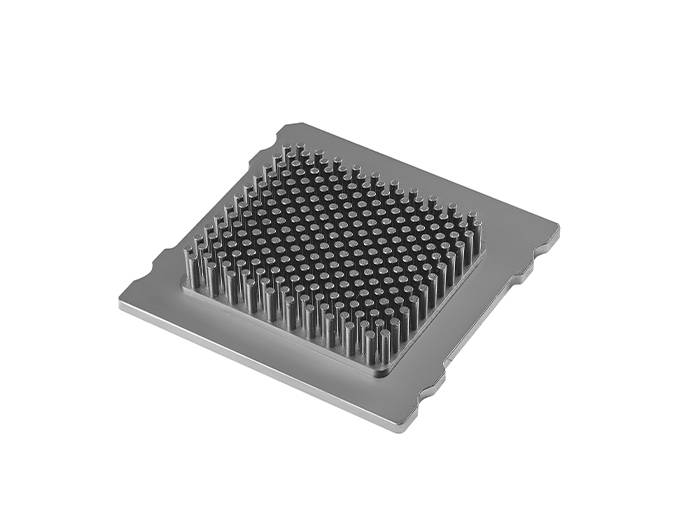
A heat sink for CPU water cooling comprises a heat dissipation substrate and a plurality of heat dissipation pins arranged on the heat dissipation substrate, characterized in that the heat dissipation pins form a helical shape coiled upward in concentric rings.


Advantages: The spiral shape guides the coolant to form a rotating flow field, enhancing contact and heat exchange with the heat dissipation pins while extending the heat exchange path. This reduces localized heat dissipation imbalances and improves overall cooling efficiency.


intro4
High-density Inclined Fin Cover

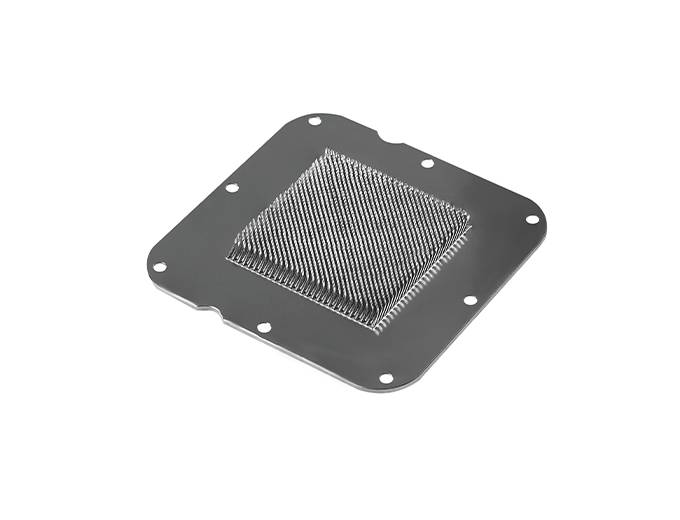
A high thermal conductivity dual liquid-cooled heat sink comprises a heat dissipation substrate and a plurality of fins disposed on the heat dissipation substrate, with adjacent fins spaced apart. It is characterized in that one or more fins are bent toward the spacing side, and the bent edges overlap or closely cover the top opening of the spacing.


Advantages: Through the synergistic operation of dual cooling paths, the thermal load of a single liquid cooling path can be significantly reduced, markedly enhancing overall heat dissipation efficiency to meet the cooling demands of medium-to-high power density equipment.


intro1
CNC Forging

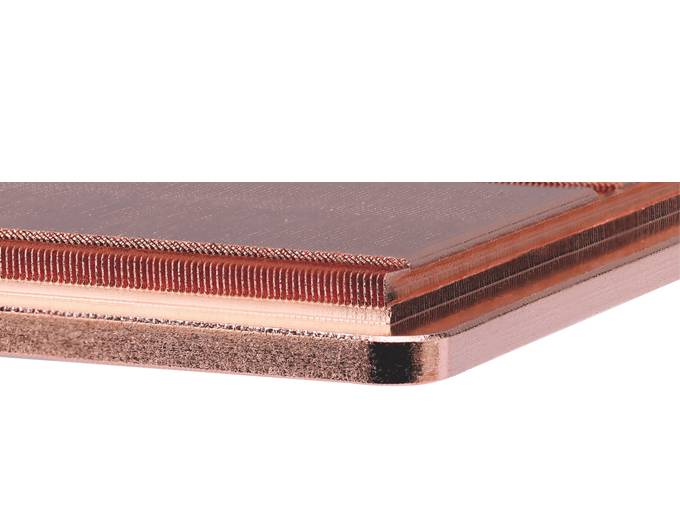
• CNC Forging Hot Swaging: A process where metal billets are heated above the recrystallization temperature (typically ≥800°C) and subjected to axial pressure via CNC-controlled dies, inducing plastic deformation by leveraging high temperatures to reduce metal deformation resistance.

• CNC Cold Forging: A process performed at room temperature where CNC-controlled dies apply pressure to metal billets. This cold plastic deformation forming technique requires no heating, relying instead on the metal's inherent plasticity at ambient temperatures.

• Advantages of hot forging: Low forming resistance, capability to process large-section/complex structural components, excellent material plasticity with low susceptibility to cracking, and ability to eliminate internal defects in billets (such as porosity and gas holes).

• Advantages of cold forging: tight dimensional tolerances (±0.01–0.05 mm), low surface roughness (Ra ≤ 1.6 μm), high material utilization (≥95%), rapid production efficiency (suitable for mass production), and minimal or no subsequent machining required.